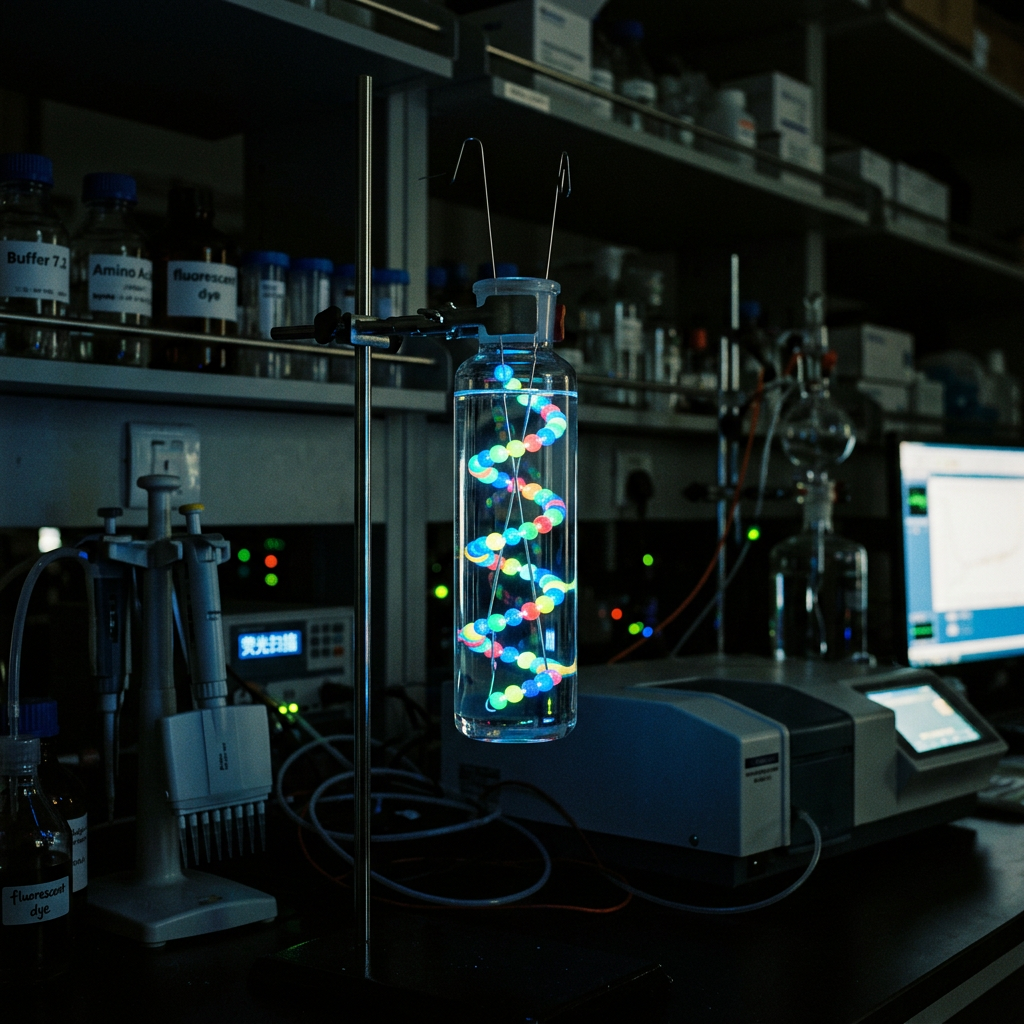
If you’ve been paying attention to the cutting edge of health, longevity, and physical optimization lately, you’ve likely seen the word peptides everywhere. They are being hailed as a major breakthrough in wellness, but cut through the marketing buzz, and a fundamental question remains: What actually are they, and why is the research community so focused on them?
To understand why peptides are changing the game, you have to look past the trends and dive into the actual science of how your cells communicate.
The Building Blocks: Letters, Words, and Paragraphs
To understand what a peptide is, it helps to look at the structural building blocks of the human body. Think of the relationship between amino acids, peptides, and proteins as a language:
- Amino Acids are individual letters.
- Peptides are short, precise words (usually chains of 2 to 50 amino acids).
- Proteins (like collagen or muscle tissue) are complex paragraphs made of massive chains of amino acids.
Because peptides are relatively short chains, they possess a unique ability to act as precise cellular messengers. They don’t force a foreign, synthetic process onto your body. Instead, they bind to specific receptors on the surface of your cells, handing them a highly targeted instruction manual to perform a specific job.
The Specificity Advantage: Target vs. Shotgun
Traditional supplements often take a “shotgun approach”—you swallow a capsule, it floods your system, and you hope your body uses it effectively. Peptides work via cellular signaling. They are highly specific keys designed for very specific locks.
When a peptide binds to a cell, it can signal the body to trigger distinct biological responses, such as:
- Upregulating Tissue Repair: Sending direct signals to accelerate the healing of localized connective tissue, tendons, and muscles.
- Optimizing Metabolic Efficiency: Prompting the natural, steady release of the body’s own growth factors rather than introducing harsh, synthetic hormones.
- Supporting Mitochondrial Function: Encouraging cellular energy production at the root level, helping cells bounce back from stress and fatigue.
Why the Foundation Matters
While advanced compounds offer incredible potential for cellular signaling, they aren’t magic bullets that work in isolation. Think of a peptide as a blueprint for a house: it tells the workers exactly what to build, but you still need to supply the premium brick and mortar.
To maximize any optimization protocol, the biological foundation has to be locked in:
Deep Sleep: True cellular repair and natural growth factor surges peak during deep, slow-wave sleep.
Nutrient Density: Your cells need a steady pool of high-quality amino acids, vitamins, and trace minerals to actually execute the instructions that peptides send them.
Stress Management: Chronic, unmanaged stress floods the system with cortisol, which can blunt cellular receptivity and slow down the body’s natural regenerative processes.
The Bottom Line
Peptide research isn’t about overriding or rewriting human biology. It’s about discovering how to speak your body’s native language. By delivering precise instructions to our cells, we can support the body’s natural ability to repair, recover, and perform at its absolute best.
Real optimization is where cutting-edge cellular science meets uncompromising lifestyle fundamentals.
Quick Reference: How Peptides Compare
| Category | Structure | Primary Function |
|---|---|---|
| Amino Acids | Single molecules | The raw materials and building blocks of life. |
| Peptides | Short chains (<50) | Targeted cellular messengers that deliver specific instructions. |
| Proteins | Long, complex chains | Large structural components like muscle, skin, and organs. |